
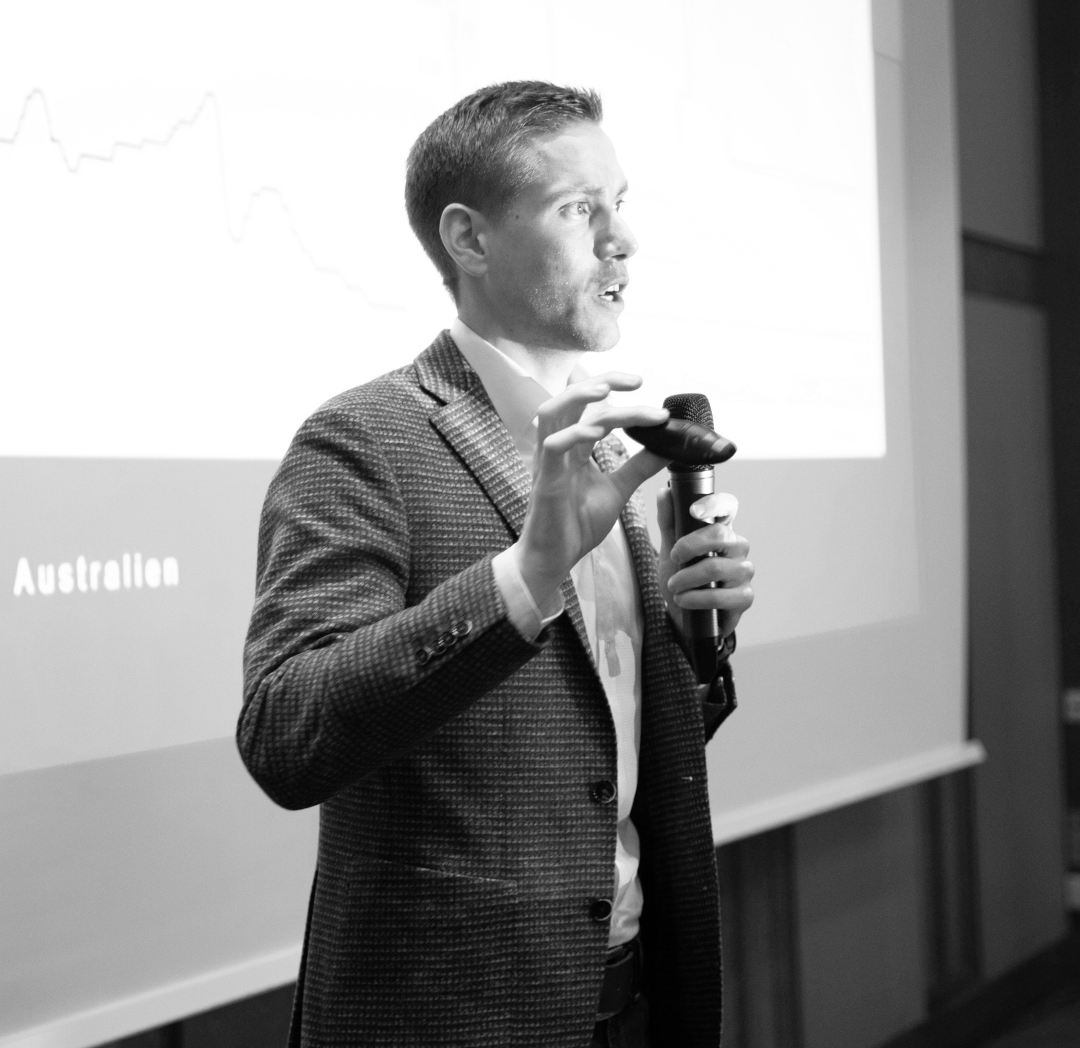
 By Marco Bösing
Learn day trading: what to start with and how realistic it is
You can learn day trading, but it costs you time and money, and there is no shortcut. Start by learning how the market works mechanically and how to limit your risk, and begin with a micro future on the S&P 500. Plan on at least one to two years of serious work and, if you trade your own money, 3,000 to 5,000 dollars you can afford to lose.
I started in 2010 as a junior trader at a private forex asset manager in Bonn. I had something there that you won't have at home: someone else made the rules.
Risk Warning: Trading futures and other financial instruments carries significant risk of loss. Past performance is not indicative of future results. Only trade with capital you can afford to lose.
What day trading is and how it works
In day trading you open and close all your positions on the same day and go into the night with nothing open. You make money when you get out at a better price than you got in. That works in both directions, because you can also go short.
Every trade has one buyer and one seller. So price doesn't rise because more people want to buy. It rises when buyers use market orders to take everything offered at the current price and have to move up to the next one. Falling prices work the other way around.
Your day has three parts: preparation, time in the market, and review afterward. The US stock market runs from 9:30 a.m. to 4:00 p.m. New York time. In Germany that is 3:30 p.m. to 10:00 p.m., and one hour earlier during the weeks when the US and Europe don't change their clocks at the same time.
What to learn, and in what order
Start with mechanics and risk, and leave drawn lines and indicators alone for now.
As a junior trader on an FX desk, my job often wasn't to decide direction at all. I had to collect clean average prices, and my instructions told me what to do, in which direction and with how much risk. The structures that kept risk small came from the firm. At home there is no firm. You write the rules yourself, and nobody checks whether you follow them.
That's why I would go in this order:
- Mechanics. What a tick and a point are worth, how much money you move with one contract, what bid and ask are, and what market, limit and stop orders do. Before every trade you have to be able to say in dollars what your stop costs you.
- Risk. How big your position is, what a trade may cost, and at what daily loss you stop. You settle this before your first trade. My article on risk management shows you how to calculate it.
- One market. Pick one contract and a fixed time of day, and stay with it until you know how it moves. That includes the economic calendar. In my time as an institutional trader it was the first task of the morning, before I even looked at the charts.
- The data and what's behind it. People trading large positions do it because of valuation, meaning rates, inflation expectations and news. That decides direction, and the chart only tells you how to get in. If you look at the chart alone, you get long and short signals all day and don't know which one counts. To me that is psychological terror. On the desk we had exactly two tools, the order book and the tape, and no moving averages. You will never trade like an institution, but you can understand what the big players have to do because of their size and trade in their direction. It always stays a probability. Order flow trading covers how to approach that today.
- Simulator first, then small money. In the simulator you spend a few weeks learning the platform and order execution. You won't learn there what a real loss does to you. So after that, you go live with a single micro contract.
- The journal, from your first trade. On the desk, no trader left the trading room without documenting their trades. At home you keep your journal yourself.
Your first contract is the MES
Start with the Micro E-mini S&P 500, or MES for short. It's a future on the S&P 500 at one-tenth the size of the regular contract.
| Contract | One point | One tick |
|---|---|---|
| MES | 5 dollars | 1.25 dollars |
| MNQ | 2 dollars | 0.50 dollars |
| ES | 50 dollars | 12.50 dollars |
With the S&P 500 at 7,400 points, one MES moves 37,000 dollars and the big ES moves 370,000 dollars. That's why you learn on the small one.
Futures trade on an exchange. You see real volume and a real order book there, and that's exactly what you need to learn who is trading. Your provider sets CFD prices off-exchange, so you can't see the volume of the market. The full comparison is in futures vs. CFDs.
There is one thing you have to check with futures. With CFDs, your loss as a retail client in the EU is limited to the money in your account. With futures it depends on your broker and your contract. On an account under US rules, you are liable for any deficit.
We mostly trade the NQ ourselves. I would still start you on the MES, because the S&P moves more slowly and gives you more time to react. S&P 500 vs. Nasdaq covers the differences. Micro futures have their own thinner order book, so many traders read the data from the big ES and trade the MES.
What it costs in time and money
Plan on at least one to two years of serious work before you make money consistently, if it works out at all. The 3:30 p.m. open falls in the middle of your workday. Alongside a full-time job you will mostly see only the later part of the session, until 10:00 p.m. That's doable, but you miss the first hours.
To start on micro futures with your own money, I'd plan on 3,000 to 5,000 dollars. Less is technically possible. NinjaTrader has no minimum deposit and asks for only 50 dollars of intraday margin on one MES, and about 2,900 dollars overnight. But margin is only collateral for a position. It doesn't tell you how much you can afford to lose. With 5,000 dollars and 0.5 percent risk, a trade may cost 25 dollars, which is 20 ticks on the MES before fees and slippage. With 1,000 dollars it would be 5 dollars and 4 ticks, and you can't work with that.
Then there are the running costs. I'm using NinjaTrader only as an example, and the broker comparison gives you an overview.
| Item | Price |
|---|---|
| NinjaTrader account, Free plan | 0 dollars per month |
| Commission per micro contract, per side | 0.39 dollars, plus exchange and clearing fees |
| CME Level 1 data, four-exchange bundle | 12 dollars per month, free with a funded account |
| CME Level 2 data (full depth), four-exchange bundle | 48 dollars per month |
| ATAS PRO | 69.95 EUR per month, 39.95 billed yearly |
| TradingView Basic | 0 dollars |
These are November 2026 prices, excluding VAT for ATAS. All together that comes to roughly 50 to 130 euros a month, depending on how you pay and whether you take Level 2. TradingView is enough for preparation, and for Footprints and volume I would start with ATAS PRO.
Now comes the uncomfortable math. Even 5 percent profit in a month is only 250 dollars on 5,000 dollars, and that would already be a lot. After software and data, little of it is left. You can't live on that.
A prop firm challenge can be a good way in, even at the start. Your stake is the fee, which you know up front, and the rules force you to be disciplined. If you fail, the next attempt costs the fee again. It only works if you have learned first, and it doesn't replace learning. The math is in prop trading vs. own capital.
What gets sold to you and what the work really looks like
You get sold signals, drawn lines and the promise that it's quick. The indicators that come with them only recalculate old prices. My test for that goes like this. If a line drawn at a desk at home really worked, no bank would have to pay traders to work its orders.
Social media turns that into an expectation that has nothing to do with the profession. You learn trading like any other profession, from the bottom up. At the start the goal is small gains you can repeat.
The work itself is unspectacular. You prepare the day, wait, and review what you did afterward. To me, a trader who fires at every signal has a problem. The first signal is the one everybody sees, and it often fails. If you wait for a second confirmation, you take far fewer trades and get stopped out for nothing far less often. How you react to losses decides more than the size of your account.
My recommendation
First decide whether you have one to two years and money you can afford to lose. That means 3,000 to 5,000 dollars in your own account or the fee for a challenge. If not, leave it. If so, keep your job, learn the mechanics and the risk, and trade in the simulator for a few weeks. Then go live with a single MES or take the challenge, with a journal from your first trade.
If you want someone next to you while you do it, we show you how to read the market in our mentoring.